

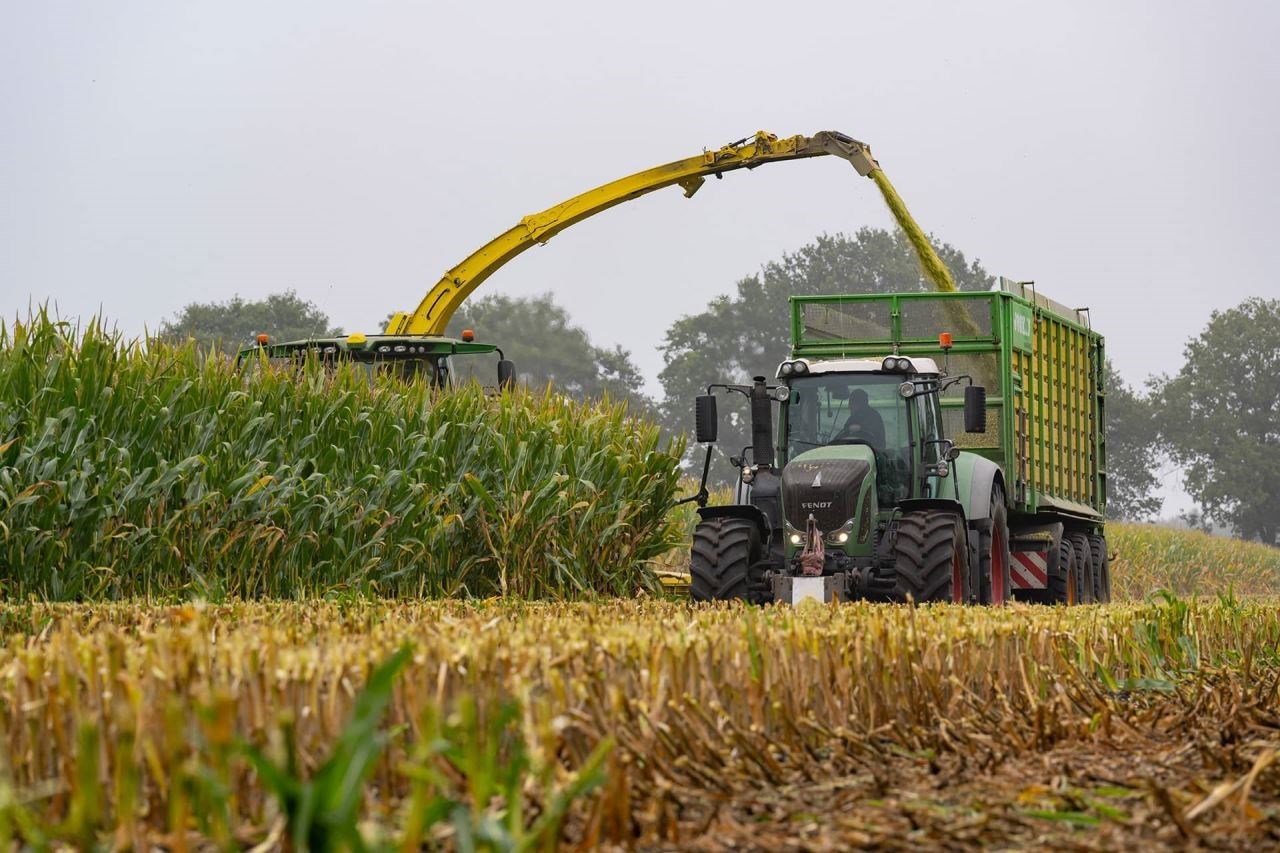
With maize harvest now underway, attention is turning to crop maturity, expected yields and the impact of the dry summer.
The prolonged dry conditions have brought crops on quickly in many areas, and this year's harvest may be earlier than normal. However, crop performance is variable, with soil type, rainfall and access to moisture having a significant influence on final yield.
What can we expect from yields?
At this stage, it is still too early to give a firm indication of final yields, but early assessments suggest considerable variation between fields.
Crops on deeper, moisture retentive soils have generally maintained better potential, while lighter soils and areas affected by drought stress may produce lower yields. As harvest approaches, monitoring cob development and whole-plant dry matter will be important in assessing the likely outcome.
Rather than focusing solely on tonnes of fresh maize per hectare, dry matter yield will give the best indication of the crop's true performance.
Keeping an eye on dry matter
With the crop potentially moving quickly following the dry summer, regular checks in the run up to harvest will be particularly important.
The aim is to harvest at the correct whole plant dry matter to achieve good fermentation and feed value. Harvesting too early can compromise yield and starch development, while allowing the crop to become too dry can make consolidation and fermentation more difficult.
This year, we are seeing many crops where the plants are starting to die back, while the milk line is still well away from the ideal stage. Once a significant number of leaves on the plant have turned brown, the crop is effectively dying. In these dry conditions, the cob is unlikely to fill much further, while the plant itself can continue to dry out rapidly.
This means it is important not to rely solely on the milk line when deciding when to harvest. Regular dry matter testing and close monitoring of crop condition will be key to getting the timing right this year.
What about additives?
The dry summer may also influence the way some maize crops ensile. Where there are concerns around dry matter, fermentation or aerobic stability, an appropriate silage additive may be worth considering.
However, additives should be selected according to the crop and intended outcome rather than applied automatically. This year, we would recommend using an additive aimed at improving aerobic stability, particularly where crops are likely to be drier than usual. Good harvesting technique, a suitable chop length, effective consolidation and careful clamp management remain fundamental to producing high-quality, stable silage.
The next few weeks
As we approach harvest, we recommend:
- Monitoring crop maturity and whole plant dry matter regularly
- Assessing cob development and kernel maturity
- Reviewing expected fresh and dry matter yields field by field
- Identifying any drought stressed crops that may require particular attention
- Considering whether an additive could provide a benefit based on the crop's condition and intended use
- Planning clamp capacity, consolidation and covering arrangements ahead of harvest
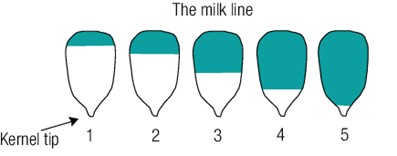
For crops that are not showing signs of the plant dying back, the quickest and easiest way to assess fitness for harvest is the “milk-line” test. This involves collecting a number of random cobs from throughout the field and assessing the kernels to see where the milk line meets the starch. This provides a useful indication of crop maturity and dry matter content and can help guide harvest timing.
The diagram below explains how the milk line moves down through the crop as it becomes more mature:
Harvesting Maize
When harvesting maize, target dry matters should be between 31-35%. To achieve this, the milk line needs to be 1/3 or ½ way down the kernel. Sometimes it can be difficult to see the milk line, therefore break the cob in half and then cut into the grain from the outer edge until you get milk.
After a challenging and unusually dry summer, this year's maize harvest is likely to be variable. Careful monitoring over the next couple of weeks will help ensure crops are harvested at the right stage and preserved to their best potential.
If you would like to discuss expected yields, crop maturity or additive options ahead of harvest, please get in touch.